Most travellers picture the Norwegian fjords in summer, with green slopes, long evenings and busy viewpoints. Winter shows the same landscape in a completely different light: snow on the peaks, low golden sun, quiet water and far fewer visitors. This guide explains what a winter fjord cruise is really like, how short the days are, what to wear and how to plan a private boat trip between November and March.
Are the Norwegian Fjords Worth Visiting in Winter?
Yes, if you know what to expect. Thanks to the warm North Atlantic Current, the coastal fjords of western and northern Norway stay largely ice-free through the winter, so the water remains navigable even when the mountains above are deep in snow. Sheltered inner bays, particularly in the east around Oslo, can see ice during cold spells.
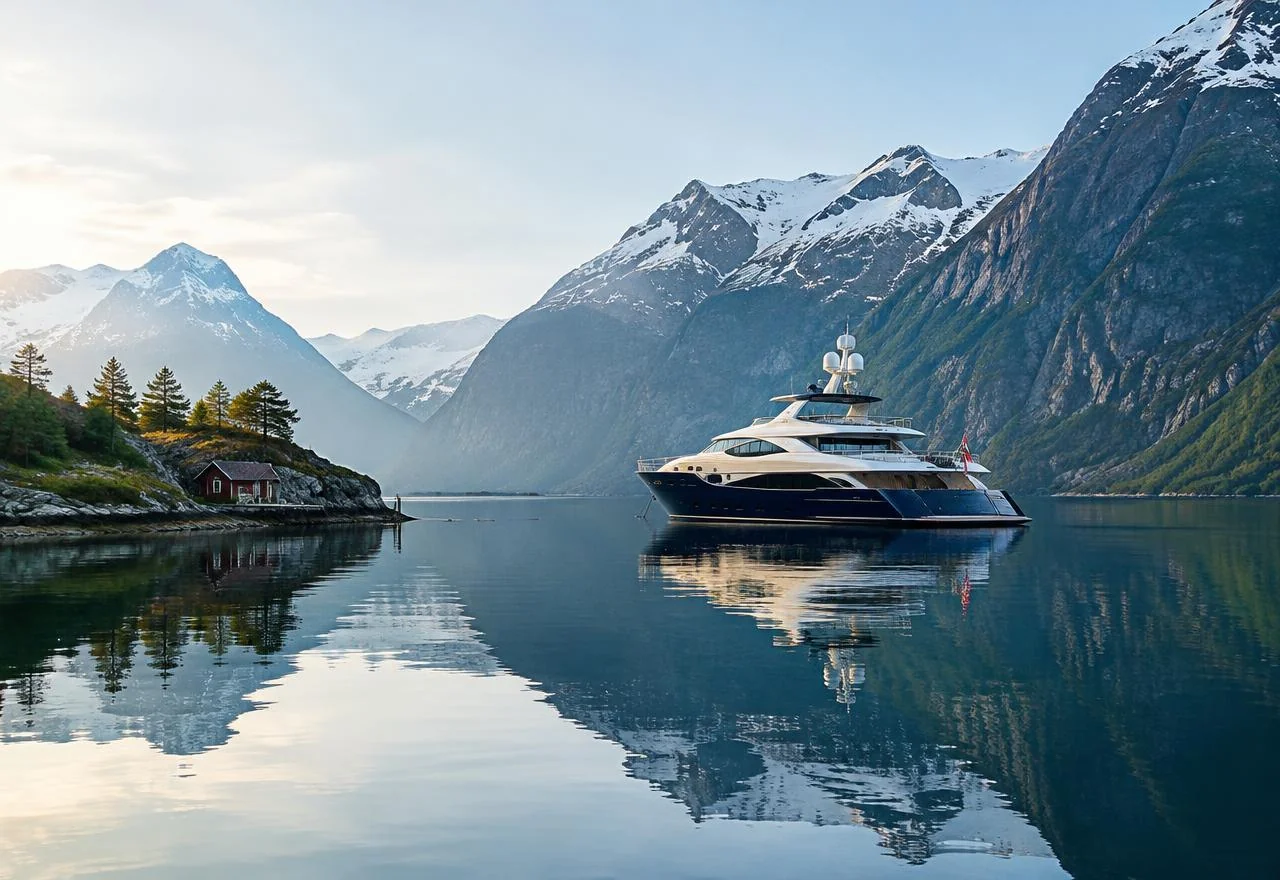
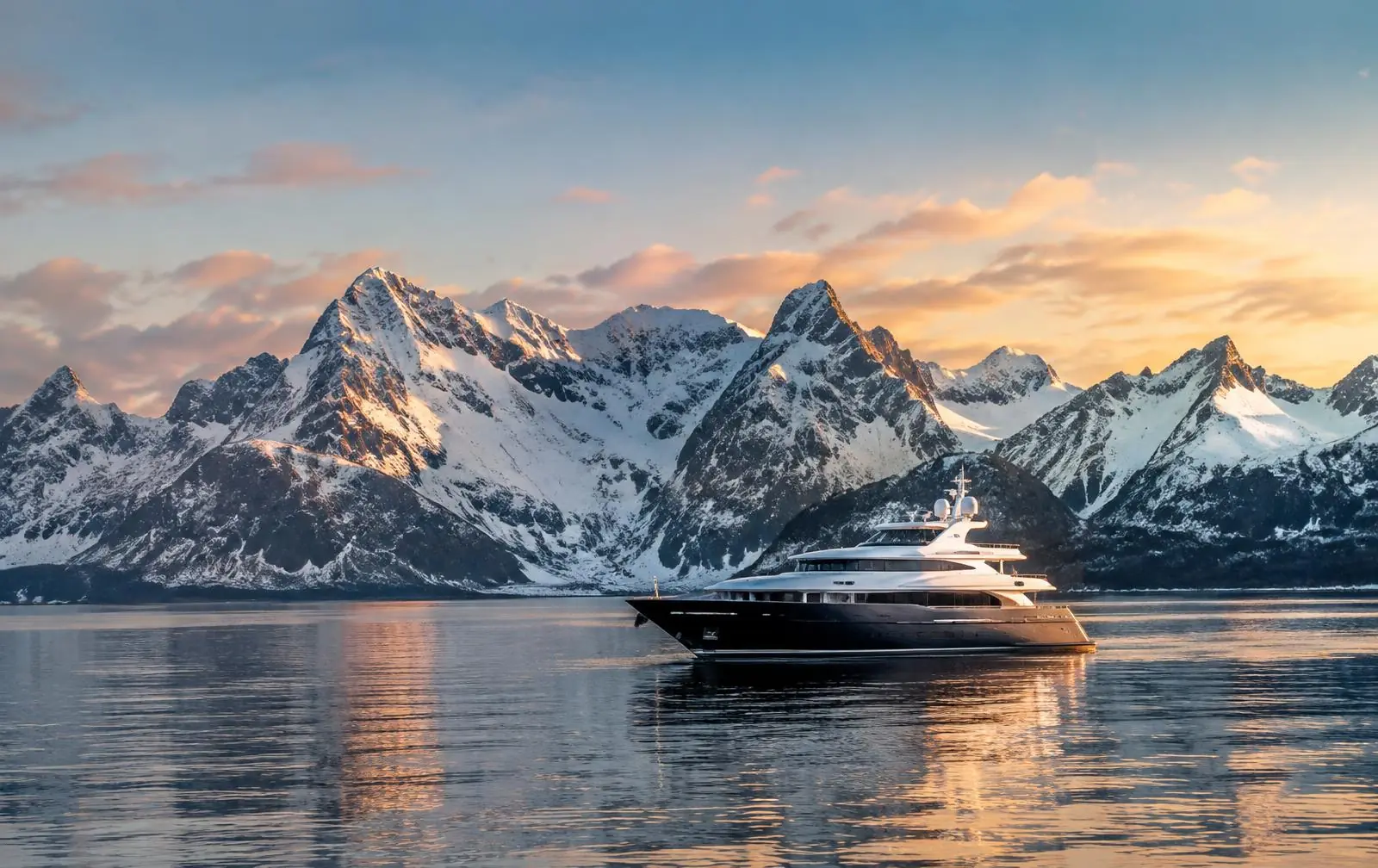
What changes is the mood. The crowds of summer are gone, the cruise ship season is largely over, and on a calm day the fjords can feel almost silent. Snow sharpens the outline of every ridge, and the low sun paints the peaks pink and gold for hours rather than minutes. For anyone who prefers stillness to sightseeing queues, winter can be the most rewarding time of all.
Daylight: Plan Around the Short Days
Daylight is the single most important thing to plan around. Around the winter solstice, Bergen, Stavanger, Ålesund and Oslo get only about five to six hours of daylight, and the sun stays low in the sky even at midday. In late November and in February the days are noticeably longer.
Further north the change is more dramatic. In Tromsø the sun does not rise above the horizon from roughly late November to mid-January, a period known as the polar night. It is not pitch dark all day: the middle hours glow with soft blue and pink twilight, which many visitors find beautiful in its own right.
For a winter charter, this usually means starting in the late morning so you are on the water during the best light, and choosing a route that does not try to cover too much distance.
Weather and What It Means on the Water
Winter weather on the Norwegian coast is changeable. Western Norway is known for rain, and along the coast precipitation can fall as rain at sea level and as snow higher up. Calm, clear days do happen, often with spectacular light, but wind and low cloud can arrive quickly.
This is why flexibility matters more in winter than at any other time of year. Your captain will look at the forecast and the conditions on the day and decide what is safe and practical. A route may be shortened or adjusted, and if weather warnings make a departure unsafe, the trip may need to move to another day.
Where to Go: Winter Fjords by Destination
Each part of the coast has its own winter character. Availability in winter varies by destination and boat, and it is always confirmed in your proposal.
- Bergen and the western fjords: Bergen is a natural winter base, with the fjords close to the city. In November and December the city is also known for Pepperkakebyen, its gingerbread town. Explore private boat charters in Bergen.
- Stavanger and the Lysefjord: The steep granite walls of the Lysefjord are dramatic in any season. Preikestolen rises about 604 metres above the water; in winter the hiking trail can be icy and snow-covered, so seeing the cliff from below on a Pulpit Rock boat trip is a comfortable alternative. See boat trips from Stavanger.
- Ålesund and the Geirangerfjord: The Geirangerfjord is part of the West Norwegian Fjords UNESCO World Heritage Site. In winter it is far quieter than in summer, some mountain roads such as Trollstigen close for the season, and the waterfalls carry less water. See Ålesund & Geiranger and the Seven Sisters Waterfall by Boat.
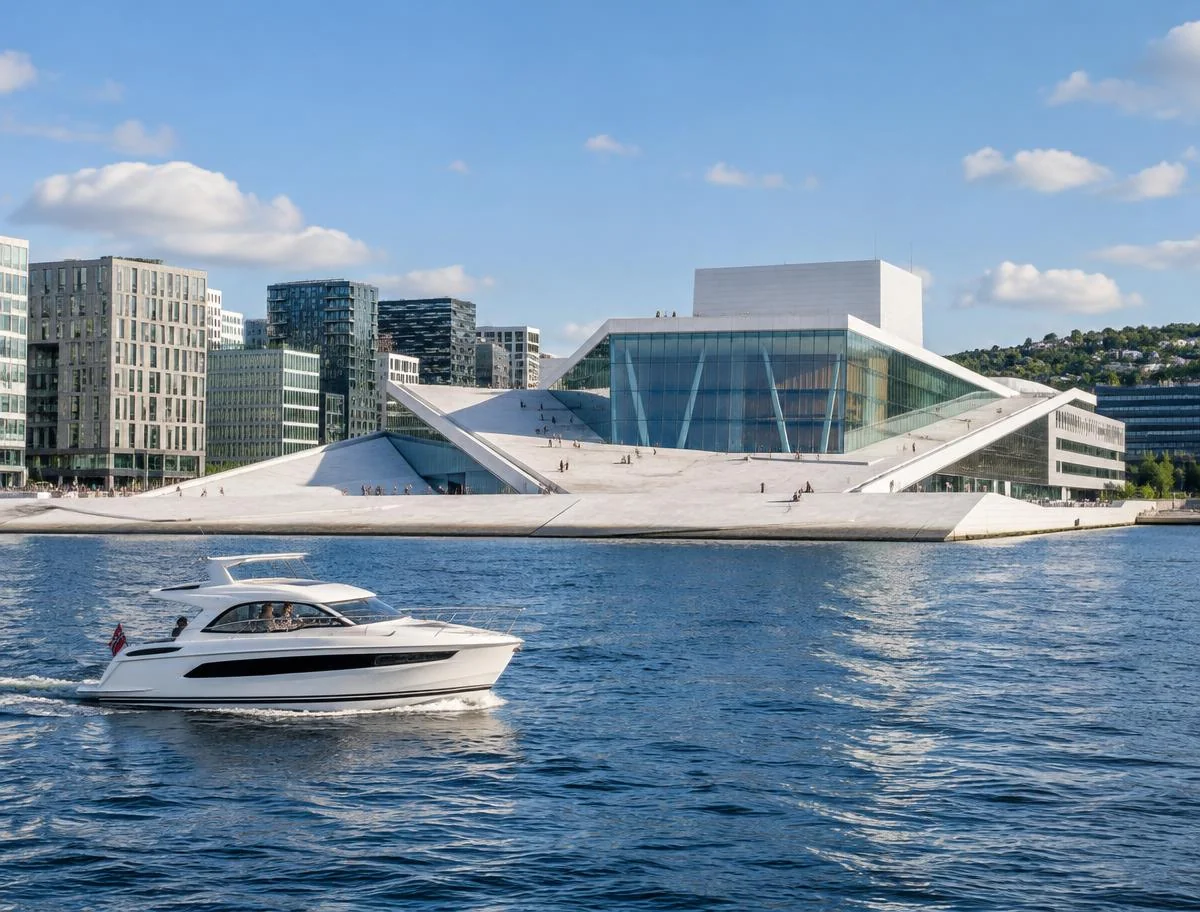
- Oslo and the Oslofjord: The Oslofjord is gentler and more sheltered, with islands close to the city. A short winter cruise pairs well with the capital’s Christmas season. See boat charters in Oslo.
- Tromsø, Lofoten and Bodø: North of the Arctic Circle, winter means snowy peaks rising straight from the sea and, on dark and clear evenings, a chance of the northern lights. See Tromsø, Lofoten and Bodø.
Winter in the Arctic: Northern Lights and Polar Light
In northern Norway, winter is the season of the aurora borealis. The northern lights can appear whenever the sky is dark and clear and solar activity is strong enough, but they are never guaranteed. Out on the water, away from city lights, the view opens in every direction. Our Tromsø Northern Lights by Boat experience is built around exactly this, and our guide to the northern lights by boat in Tromsø explains timing, clothing and photography in detail.
If you would rather focus on the daytime colours of the polar winter, the Arctic Light experience is designed around the soft light of the northern season. In Lofoten, late winter is also the traditional season of the skrei, the migrating Atlantic cod, which has shaped life in the fishing villages for centuries.
What to Wear on a Winter Fjord Cruise
Coastal temperatures in winter are often milder than inland Norway, but wind on deck and a moving boat make it feel much colder. Dress as if you will spend long periods standing still outdoors.
- Base layer: Thermal or merino wool tops and leggings.
- Mid layer: A fleece or thick wool sweater.
- Outer layer: A warm, windproof and waterproof jacket and trousers.
- Hat, scarf and gloves: A hat that covers your ears, and gloves you can wear while holding a camera or a warm drink.
- Footwear: Warm, waterproof boots with good grip, since decks and quays can be wet or icy.
When choosing a boat, ask about indoor space. A heated saloon means you can watch the scenery from the warmth and step out on deck for the best moments.
Choosing a Boat for Winter
In winter, comfort on board matters more than top speed. Look for enclosed, heated space for your whole group, good visibility from inside and safe access to the deck. Your proposal confirms which boats are available for your dates and destination.
Some boats are listed in several regions. Oda, for example, is listed for Ålesund & Geiranger, Bergen & The Fjords and Stavanger & Lysefjord, while Alva is listed for Lofoten, Tromsø and Bergen & The Fjords. You can also browse the full fleet of boats or compare yachts and motorboats.
Ideas for a Winter Day on the Water
A winter charter does not have to be a long journey. A few ideas that suit the season:
- A late-morning fjord cruise timed for the best of the low winter light. See our private fjord cruise.
- A long lunch on board while the mountains drift past. See lunch cruises and private chef options.
- A celebration on the water, from a birthday or anniversary to a ceremony on board. See weddings on a boat in Norway.
- An Arctic evening looking for the northern lights near Tromsø.
For help choosing the right season, see our month-by-month guide to the best time to visit the Norwegian fjords.
How to Plan Your Winter Fjord Charter
- Choose your destination and dates. Decide whether you want the western fjords, the Oslofjord or the Arctic north, and allow some flexibility for weather.
- Tell us about your group. Share the number of guests, any occasion and what matters most, whether scenery, a meal on board or the northern lights.
- Receive your proposal. The boat, route, timing, duration and inclusions are confirmed in a tailored proposal before you book. Price on request.
When you are ready, request a charter and we will help you plan a quiet winter day among the fjords.
Boats For Fjord And Arctic Charters
Boats currently listed for these destinations. Availability is confirmed in your proposal.
Frequently Asked Questions
Can you take a boat trip on the Norwegian fjords in winter?
Yes. Thanks to the North Atlantic Current, the coastal fjords stay largely ice-free in winter. Boat availability varies by destination and date and is confirmed in your proposal, and every trip depends on the weather on the day.
Do the fjords freeze in winter?
The large coastal fjords of western and northern Norway generally do not freeze. Sheltered inner bays, particularly in eastern Norway around Oslo, can see ice during cold spells.
How many hours of daylight are there in the fjords in winter?
Around the winter solstice, Bergen, Stavanger, Ålesund and Oslo get roughly five to six hours of daylight. In Tromsø the sun stays below the horizon from roughly late November to mid-January, although there is twilight in the middle of the day.
Is the Geirangerfjord worth visiting in winter?
Yes, for snowy scenery and quiet water. It is far less busy than in summer, but some mountain roads such as Trollstigen close for the season and the waterfalls carry less water than during the spring melt.
What should I wear on a winter fjord cruise?
Thermal base layers, a warm mid layer, a windproof and waterproof outer layer, a hat, gloves and warm boots with good grip. It feels colder on deck than on land.
Can we see the northern lights on a winter fjord cruise?
In northern Norway, such as around Tromsø, Lofoten and Bodø, it is possible on dark, clear evenings from roughly September to early April. Sightings depend on weather and solar activity and are never guaranteed.