There is no single best month for the Norwegian fjords — only the best month for what you want to see. Waterfalls, blossom, midnight sun, autumn colour and the northern lights each have their season. This guide walks through the year and the coast so you can choose the right time for a private charter.
The Short Answer
For most travellers, June to August is the easiest time to visit the Norwegian fjords by boat. Days are at their longest, temperatures are at their mildest and almost every route is practical. It is also the busiest period, so popular viewpoints and harbours see the most visitors.
Late May and early June bring a beautiful balance: snowmelt feeds the waterfalls, the Hardanger orchards blossom and the summer crowds have not yet peaked. September is the quiet favourite — calmer harbours, autumn colour on the hillsides and soft, low light. From late autumn to early spring the north of Norway becomes a different world, with dramatic winter landscapes and a chance of the northern lights.
The right answer depends on three things: which part of the coast you are visiting, the kind of light you are hoping for, and how much the weather on deck matters to your group.
Month-By-Month At A Glance
Conditions vary from year to year and from fjord to fjord, so treat the table below as a general guide rather than a promise. Wildlife and natural phenomena are never guaranteed.
| Months | What to expect on the water |
|---|---|
| January – March | Dramatic winter scenery with snow down to the shoreline. Thanks to the Gulf Stream, the coastal fjords remain largely ice-free. Northern lights are possible in the north; skrei (Arctic cod) season in Lofoten runs roughly January to April. |
| April – May | Snowmelt turns the fjord walls into curtains of waterfalls. Days lengthen quickly, and the Hardanger fruit blossom typically appears from around mid-May to mid-June. Northern lights season ends in April. |
| June – August | Longest days, warmest weather and the busiest period. The midnight sun shines in the north: roughly 20 May to 22 July in Tromsø, and roughly early June to early July in Lofoten and Bodø. |
| September | Autumn colour, fewer visitors and calmer harbours. Darkness returns to the north, and the northern lights season begins there. |
| October | Shorter, cooler days and a quieter coast. Rich autumn tones in the west, longer dark evenings in the Arctic. |
| November – December | Polar night in Tromsø from around late November to mid-January, with blue twilight around midday. In recent years, whales have gathered in fjords north of Tromsø roughly November to January — sightings are not guaranteed. |
Spring: Waterfalls And Blossom (April – May)
Spring is when the fjords come alive. As the snow on the high plateaus melts, waterfalls such as the Seven Sisters in the Geirangerfjord run at their fullest, and countless smaller falls appear along the steep walls of the western fjords. The water itself is still cold, and the air can be crisp in the mornings, but the light is bright and the landscape feels freshly washed.
In the Hardangerfjord the fruit orchards blossom from around mid-May to mid-June, depending on the year and the altitude. Seen from the water, the white and pink slopes against snow-capped peaks are among the most memorable views in Norway.
Summer: Long Days And Midnight Sun (June – August)
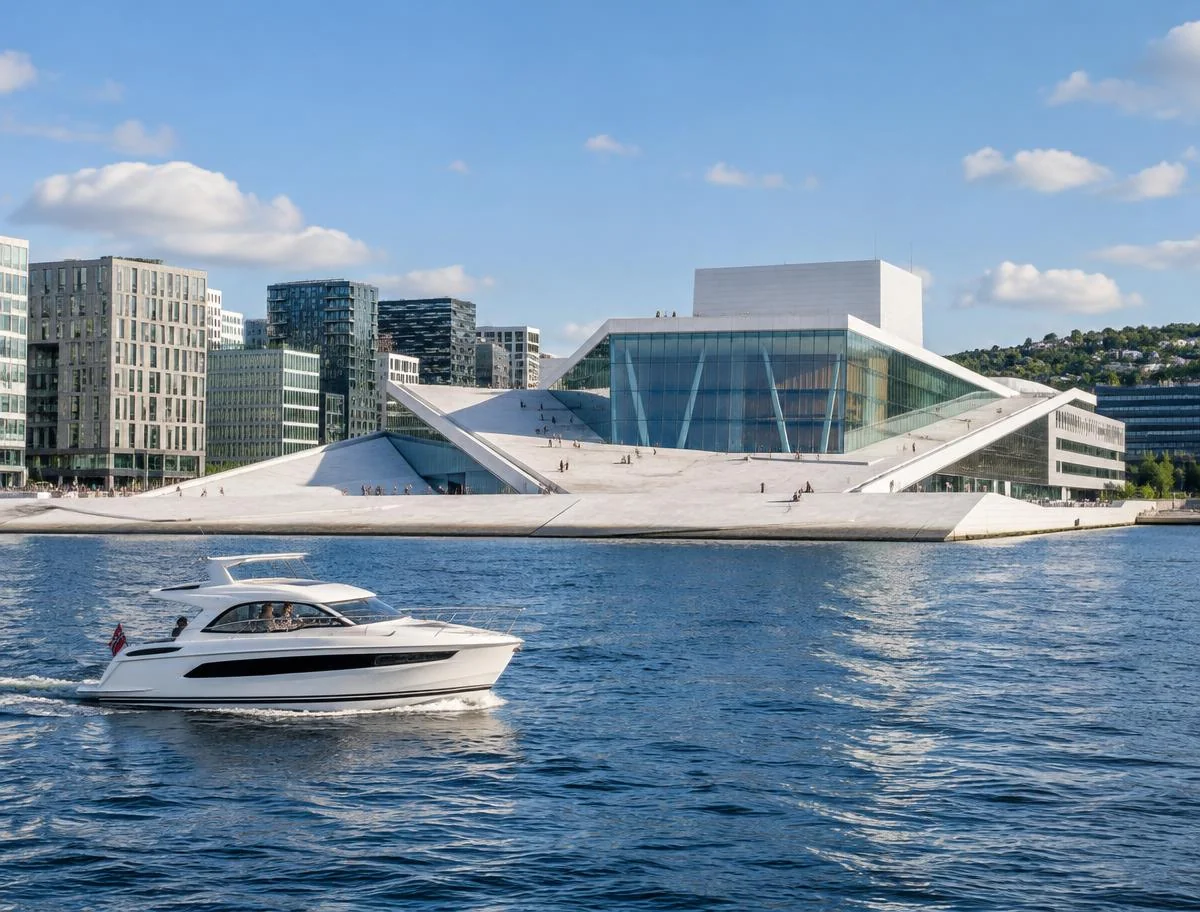
Summer is the classic season for a fjord cruise. Long evenings mean you can stay out on deck far later than you expect, and in the south the light lingers until close to midnight. The archipelagos around Oslo and Kristiansand are at their best for swimming stops and relaxed island hopping.
North of the Arctic Circle the sun does not set at all for part of the summer. In Tromsø the midnight sun lasts roughly from 20 May to 22 July; in Lofoten and Bodø it is shorter, roughly early June to early July. A late-evening cruise under a sun that stays above the horizon is a very special experience.
Summer is also the busiest time, especially in well-known fjords. A private boat gives you the flexibility to choose quieter bays and adjust timings, but it is worth enquiring early if you have fixed dates.
Autumn: Colour And Calm (September – October)
September is often the most underrated month on the Norwegian coast. The summer visitors have gone, the birch and rowan trees turn gold and red, and the low sun gives the fjords a warm, cinematic light. The weather becomes more changeable, so routes should stay flexible.
In the north, darkness returns in late August and September, and with it the first chance of the northern lights. By October the days are noticeably shorter, evenings are long and quiet, and a cruise feels intimate rather than busy.
Winter: Arctic Light And Dramatic Fjords (November – March)
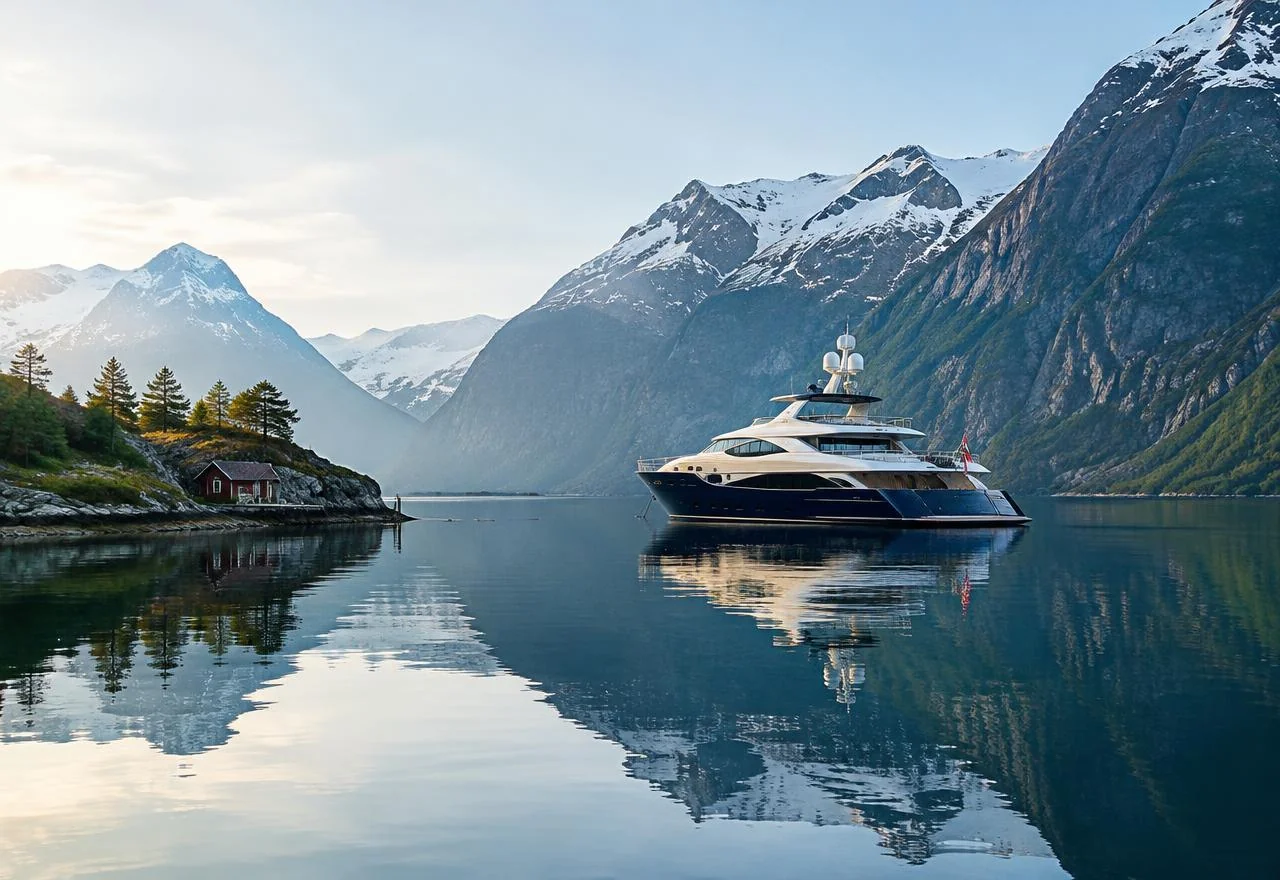
Winter is not the off-season it may appear to be. Thanks to the Gulf Stream, the coastal fjords remain largely ice-free, and snow-covered mountains rising straight from dark water create some of the most dramatic scenery of the year.
In the Arctic, the northern lights are possible roughly from September to April whenever skies are dark and clear. Around Tromsø, the polar night lasts from about late November to mid-January: the sun stays below the horizon, but the hours around midday glow with deep blue and pink twilight. In recent years whales have been seen in the fjords north of Tromsø roughly from November to January, though their movements change and sightings can never be guaranteed.
From roughly January to April, Lofoten hosts the skrei season, when Arctic cod return to spawn and the drying racks around the fishing villages fill. Daylight returns quickly from February, making late winter a striking time to visit.
Best Time By Destination
Oslo and Kristiansand are summer archipelago destinations: June to August brings warm days, swimming stops and island hopping among the skerries. Spring and early autumn are calmer and still lovely for a few hours on the water.
In western Norway — Bergen, Stavanger and the Lysefjord, and Ålesund and the Geirangerfjord — late May to September is the main season. Spring brings waterfalls and blossom, summer the longest days and autumn the colour and calm.
In Arctic Norway — Lofoten, Bodø and Tromsø — choose summer for the midnight sun and winter for the northern lights, polar night and Arctic wildlife. Each season feels like a different destination.
What To Pack And What The Weather Feels Like On Deck
Even on a warm summer day, it is usually several degrees cooler on the water than in town, and the breeze picks up as soon as the boat moves. Bring a windproof layer, a warm sweater and something to cover your head, along with sunglasses and sun protection — the summer sun reflects strongly off the water.
In spring and autumn, add a waterproof jacket and warm layers. In winter, dress as you would for a day in the mountains: thermal base layers, a warm insulated jacket, a hat, gloves and warm footwear with good grip. Weather on the Norwegian coast can change quickly, so routes are always adapted to conditions and safety.
How To Plan A Private Charter
Start with the destination you will already be visiting, your dates and the size of your group. Then think about the experience you want: a sunset cruise, a full day in the fjords, a journey under the Arctic light or a multi-day voyage.
Send your request and we will reply with a tailored proposal. Availability, boats and routes are always confirmed individually in your charter proposal, and the itinerary is shaped around the season and the conditions on the day.
Boats For Fjord And Arctic Charters
Boats currently listed for these destinations. Availability is confirmed in your proposal.
Frequently Asked Questions
What is the best month to visit the Norwegian fjords?
For most visitors, June to August offers the longest days and mildest weather. Late May and early June are ideal for waterfalls and blossom, while September is quieter with autumn colour.
Are the fjords worth visiting in winter?
Yes. Thanks to the Gulf Stream, the coastal fjords remain largely ice-free, and snow-covered mountains create dramatic scenery. In the north, winter brings a chance of the northern lights and polar night.
When can you see the midnight sun in Norway?
North of the Arctic Circle in summer: roughly 20 May to 22 July in Tromsø, and roughly early June to early July in Lofoten and Bodø.
When is the best time to see the northern lights from a boat?
In northern Norway, roughly from September to April, on dark and clear nights. Sightings depend on weather and solar activity and are never guaranteed.
Is it cold on a fjord cruise in summer?
It is usually cooler on the water than on land, especially once the boat is moving. Bring a windproof jacket and a warm layer even on sunny days.
When is the best time to see the Hardanger blossom?
The fruit orchards along the Hardangerfjord typically blossom from around mid-May to mid-June, depending on the year and altitude.